Fatal Flaws of Root Cause Analysis Systems

This may be the longest article I’ve ever written, but I think the topic is important enough to spend the time writing (and reading) this article because of the consequences of fatal flaws in your root cause analysis system. What consequences? A flaw could be the difference between life and death.
What is a Root Cause Analysis System Fatal Flaw?
Because root cause analysis is a critical system for maintaining safety, environmental quality, equipment reliability, and operational performance, the root cause analysis system you adopt should NOT have any fatal flaws. But what is a root cause analysis fatal flaw?
RCA Fatal Flaw
Any weakness or missing component of a root cause analysis system that could:
- lead to a poor root cause analysis,
- cause missed root causes during an investigation,
- cause difficulty in collecting accurate information,
- lead to corrective actions that don’t prevent future repeat incidents,
- waste investigator’s time, or
- produce results that mislead management and waste corporate resources.
Common RCA Fatal Flaws
So, what are the common problems that I’ve seen in over 38 years of reviewing and evaluating root cause analysis systems? Here’s a list of 20 problems that are all too common:
- Lack of Guidance for Investigators
- Not a Complete System
- Too Complex/Simple
- Only Used for Minor/Major Incidents
- Can’t Work Across Organizational Boundaries
- Causes Blame
- Start with the Answer
- The Operators Know the Problems and What To Do to Fix Them
- Lack of Solid Human Factors Basis
- Lack of Equipment Troubleshooting Tools
- Lack of a Solid Management System Basis
- No Guidance for Development of Corrective Actions
- Corrective Actions Aren’t Tracked to Completion
- Lack of Testing
- Little Continuous Improvement
- Lack of User Support
- Little International Support
- Only Works in One Industry
- Can’t Be Used Proactively
- No or Little Software
That’s a long list. And many root cause systems have more than one of these fatal flaws. Perhaps that’s why so many root cause analysis systems don’t prevent the recurrence of incidents.
Let’s look at each flaw in more detail so you can clearly understand it and avoid it in the future.
Lack of Guidance for Investigators
I wrote a whole article about the guidance that an investigator needs to find real root causes. See it HERE.
For a quick summary, watch this video…
Many systems don’t have guidance for investigators. The investigators must depend on their own knowledge to find root causes.
Why is this a problem? Because most investigators lack training in human factors. For years, we did a basic poll at the start of our 5-Day TapRooT® Advanced Root Cause Analysis Courses. We asked:
“How many of you have had any formal training
in human factors or the causes of human error?”
Only about 2% of the attendees had ANY training on the causes of human error. But almost everybody attending our training said they had previously been assigned to find the causes of human errors.
But even if they had some human factors training, they may look for their favorite root causes instead of considering all the possibilities that could cause human errors. So even those people need guidance.
Without guidance, root causes are missed and therefore, never fixed. The problems are left in the system to cause future incidents or more significant accidents.
Not a Complete System
Some incident investigation and root cause analysis systems don’t cover the whole root cause analysis process from start to finish. For example, many systems don’t include techniques to gather evidence before analyzing the incident’s root causes. Others don’t include the development of effective corrective actions.
Without a complete process, investigators often shortcut part of the investigation process (the missing part) or don’t have the tools for a superior investigation and root cause analysis.
A missing part of the system is a fatal flaw because a complete system is needed for superior root cause analysis results. An incomplete system produces substandard results. And nobody wants substandard results from a critical system.
Too Complex/Simple
Some root cause systems are too simple. Some are too complex. The worst takes something too simple and makes it sound complex.

What did Albert Einstein have to say about simplicity and complexity? He said:
“Everything must be made as simple as possible. But not simpler.”
So the question is, how simple can you make the system and still find the real root causes of the incidents that you investigate?
Then again, some people get fooled and pick a system because of a complex-sounding sales pitch. A pitch that sounds high-tech but still doesn’t produce reliable root cause analysis.
Arriving at the proper tradeoff between simplicity and complexity isn’t easy. Is your root cause system at the right level? The wrong level can lead to poor root cause analysis and poor corrective actions. And that’s a recipe for disaster.
Only Used for Minor/Major Incidents
Some companies have one root cause system for simple incidents and one root cause analysis system for serious injuries and fatalities. Why is this a problem?
First, investigators who investigate both simple and serious incidents have to learn two systems.
Second, investigators don’t get much practice using the system for serious incidents. Therefore, they don’t practice the skills that they really need to be best at.
Third, it is difficult to compare statistics from the two different root cause systems.
Fourth, the simple system rarely produces adequate corrective actions, so the major accidents that could have been prevented by the corrective actions from the simple incidents don’t get prevented.
And fifth, management has to learn two systems.
Do you use two different systems for different levels of incident seriousness? Don’t accept this inefficiency and the problems created by two (or more) different systems. Consider adopting a root cause system that could be used for both simple and complex incidents.
Can’t Work Across Organizational Boundaries
Do you have one system for quality problems and another one for safety problems? What about another system for equipment reliability issues and still another for problems in facility operations?
These multiple systems cause the same problems that we mentioned in the section above.
Have you ever asked yourself if it wouldn’t be easier to adopt a system that works for quality, safety, equipment reliability, and operational excellence problems, so that everyone learns and uses a standard root cause analysis system?
Causes Blame
We’ve written many articles about blame and the adverse effect it has on root cause analysis. Here’s a sample:
- Is Blame Built Into Your Root Cause System?
- The Blame Game & RCA
- How Can Blame Cause Accidents?
- Trapped in the Blame Vision
- “New” Blame Culture: How Investigators Lose Their Way
And then there is this video…
Let’s face it. Blame is bad. And if your root cause analysis system doesn’t fight blame (or worse yet, promotes blame), you need a new root cause analysis system.
Start with the Answer
I had a boss who liked to start investigations with the answer. Why? Because to him, the answer was obvious. All the investigator had to do was find the data that proved his obvious answer was right.
This was efficient because he already knew what he wanted to do. He had what he thought was the obvious corrective action.
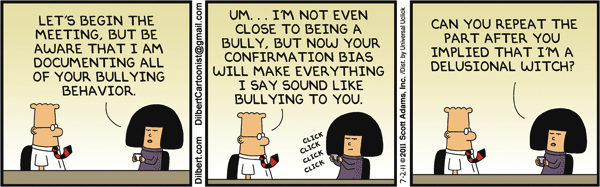
Unfortunately, his approach is almost the definition of “Confirmation Bias.”
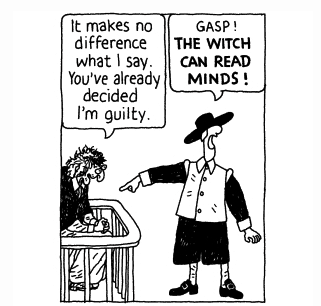
Does your system allow confirmation bias to exist? Or even worse, does your system promote confirmation bias? Then you need a different root cause analysis system. Because if your system is cursed with confirmation bias, you won’t be finding and fixing the true root causes of problems.
The Operators Know the Problems and What To Do to Fix Them
I’ve heard several people (experts) say that you get the people involved (the operators) together in a room, and they will know what the problems are. Going one step further, they will know the best solutions. The experts say this replaces root cause analysis, making RCA obsolete.
What we observed is that this is similar to the “start with the answer” that is described above. Thus, it is a root cause system that gets the operator involved (which isn’t bad), but, in many cases, doesn’t produce effective corrective actions because the operators don’t have knowledge of human factors (see the next section for why that is bad).
Get line people involved, but give them an advanced, complete root cause analysis system and adequate root cause analysis training so they understand and can successfully use the system.
Lack of Solid Human Factors Basis
Some root cause systems have no human factors basis. Often, they stop at “human error.”
Other systems claim to solve human errors, but they don’t have a real human factors system approach.
Some systems claim to have a human factors basis, but the system itself isn’t designed with human factors in mind.
And some systems have complex, unclear root cause tools that can’t be successfully applied.
What do you need? A system that has a solid human factors basis, and the system was designed by a human factors expert (or experts) and reviewed by even more human factors experts.
Does your system meet this test? If not, you need a better system to stop human errors.
Lack of Equipment Troubleshooting Tools
If you have incidents that include equipment failures, you need to do equipment troubleshooting before you start your root cause analysis.
Many people list equipment failure as the root cause. However, this is only the start of a root cause analysis of an equipment failure. One needs to analyze the symptoms and determine the cause of the equipment failure. This starts with troubleshooting the cause of the failure.
Does your system have effective equipment troubleshooting tools developed by an equipment reliability expert? If not, your people probably don’t have the information they need to find the root causes of equipment failures.
Lack of a Solid Management System Basis
One of the first root cause systems that I reviewed didn’t have management system causes. In fact, the term management system wasn’t in common usage. See the story of the creation of the management system root causes at THIS LINK.
Does your root cause system have guidance to help investigators find management system root causes? No? Then you need a different system that helps you find and fix management system root causes.
No Guidance for Development of Corrective Actions
Many systems appear to find root causes but then leave it to the investigators or management to develop corrective actions. The system provides zero guidance to those creating the corrective actions. Or they might use brainstorming. Therefore, the people creating the corrective action often use what we call the three standard corrective actions:
- Training
- Discipline (start with warning the operator to be more careful)
- Write a procedure (or make it longer)
If these are the three top corrections from your root cause system, you need a new root cause system because people aren’t familiar with the many ways to improve human performance. And you will suffer from repeated incidents because ineffective corrective actions didn’t fix the problems that were identified.
Corrective Actions Aren’t Tracked to Completion
What’s worse than bad corrective actions? Good corrective actions that are never implemented.
Does your root cause analysis system have corrective action tracking? Is your management aware of the status of corrective actions? Does your management make sure resources are allocated to get corrective actions implemented?
If your system doesn’t have corrective action tracking, you need a new system that helps management get things done.
Lack of Testing
How do you know your root cause analysis system works? You test it.
How do you test it? With hundreds of incidents. The results of the investigations are then reviewed by experts. Plus, the corrective actions are tested for face validity and for effectiveness over time.
Next, the system is implemented, and reviews are conducted of the use of the system by people in the field. The users are asked for their feedback, and their results are, once again, reviewed for effectiveness.
When new users are trained, instructors review the results of every training course and make adjustments to the training to get more effective results from new users.
Finally, you get a review team of users (an advisory board) from leading companies around the world to provide improvement suggestions and review proposed improvements.
Has your system gone through systematic testing? If not, get a better, tested system.
Little Continuous Improvement

The testing above is the start of continuous improvement. Every course, every year, the root cause system, training, and software get better and better.
What is being done to continuously improve your root cause analysis system? How many years and revisions has it been through?
If your system doesn’t have a long history of testing and continuous improvement, perhaps you should consider another system that does?
Lack of User Support
How is the root cause system you use supported?
Can you participate in a user group that shares best practices? Do they have a conference to share lessons learned and the latest improvements?
Will they answer your questions if you face a difficult investigation?
Do they support your investigations with a professional facilitator when you need one? Not someone to perform an investigation, but someone to coach your team and teach them how to solve a difficult problem?
Even a good system needs support. Support helps you when you are in need. Support helps you stay on track. Support helps you improve in real time.
Little International Support
Often, root cause systems are developed in a local area and don’t offer support around the world. Perhaps that’s because they don’t have advisors from other countries. Perhaps they don’t have instructors from different cultures.
If you are a multinational corporation, is your root cause analysis system supported around the world? Does it have multi-lingual instructors? Is the software supported by translations?
You need a good system, training, and software for all your facilities around the world for great investigations, no matter where the accident happens.
Only Works in One Industry
No industry is so specialized that the reasons for a human error are different than any other industry. The same for equipment failures. Yes, there may be specialized technology, but there are usually more similarities than differences.
That’s why I find it so strange to see a root cause system that claims to be specialized for a single industry. I’ve seen this, for example, in the healthcare industry. And perhaps that’s why their root cause analysis has not produced rapid improvement. Perhaps they should be learning from the best practices of other industries when they use their root cause analysis system.
Find a root cause analysis system that is used around the world, in a variety of industries. This will help your company learn from other high-performance industries.
Can’t Be Used Proactively

Root cause analysis started as a reactive tool. However, you should apply it proactively to stop errors before they happen.
Does your root cause system support proactive improvement? If not, you are learning less than you should and waiting for accidents to learn.
No or Little Software
Many root cause systems have no software support. Some have “simple” systems that provide a few aids to the investigator, but not a complete root cause system.
What does an investigation team and management need? A complete root cause system that helps solve all of the potential problems listed in the previous sections.
Does your root cause analysis system have software? Does it effectively support the investigation team?
Perhaps in the near future, the software should support the investigation team with AI to make their root cause analysis system even easier and more effective.
Consider the effectiveness and ease of use of the software when choosing your root cause system. Otherwise, you may find that the software is difficult to use and doesn’t support your team’s needs.
What is the Status of Your Root Cause System?
Do you spot any fatal flaws listed above in the root cause system that you use? Are those flaws leading to poor root cause analysis and corrective actions at your facility? Could you have a more rapid, successful improvement if you could adopt a system without these fatal root cause analysis flaws?
How Does the TapRooT® Root Cause Analysis System Rate vs. the Fatal Flaws?

You may have heard of the TapRooT® Root Cause Analysis System. You may even be a TapRooT® User. But do you know how TapRooT® Root Cause Analysis rates against the fatal flaws listed above? Let’s look at each of the categories and how TapRooT® RCA rates.
Lack of Guidance for Investigators
One of the TapRooT® System’s strongest features is the guidance it provides to investigators. Read the article HERE to find out more about the excellent guidance and documentation of the TapRooT® Root Cause Analysis System.

The guidance includes the:
- The Root Cause Tree® Diagram
- The Human Performance Troubleshooting Guide
- The Root Cause Tree® Dictionary
- The Corrective Action Helper® Guide
- The 12-Step Interviewing Process
- The Equifactor® Troubleshooting Tables
- The 10-volume set of the TapRooT® Books
- The TapRooT® Software
- The TapRooT® Training
We are sure you will find that the guidance provided to investigators is far superior to any other root cause system.
Not a Complete System
The TapRooT® System is a complete root cause analysis system that is well-documented and will be explained further in the sections below.
Too Complex/Simple
We took Albert Einstein’s advice and created a system that is neither too complex nor too simple. To do this, we had to create two different processes. One for simple investigations and one for complex, serious incidents. Both systems are based on the same essential tools. We will explain the processes and tools more in the following sections.
Did we achieve the proper tradeoff? We think so. And so do our clients.
To achieve the proper tradeoff, we developed two processes (one for simple incidents and one for serious incidents) that use the same essential tool. See the processes in the next section.
Only Used for Minor/Major Incidents
TapRooT® RCA has always been applied to minor and major incidents. However, some of our users didn’t see how to simplify the original TapRooT® RCA Process for simple incidents. Therefore, in 2015, we developed two separate but related processes. One for incidents with lower risk (simple incidents) and one for incidents that have greater risk (complex or serious incidents). The two processes are shown below…
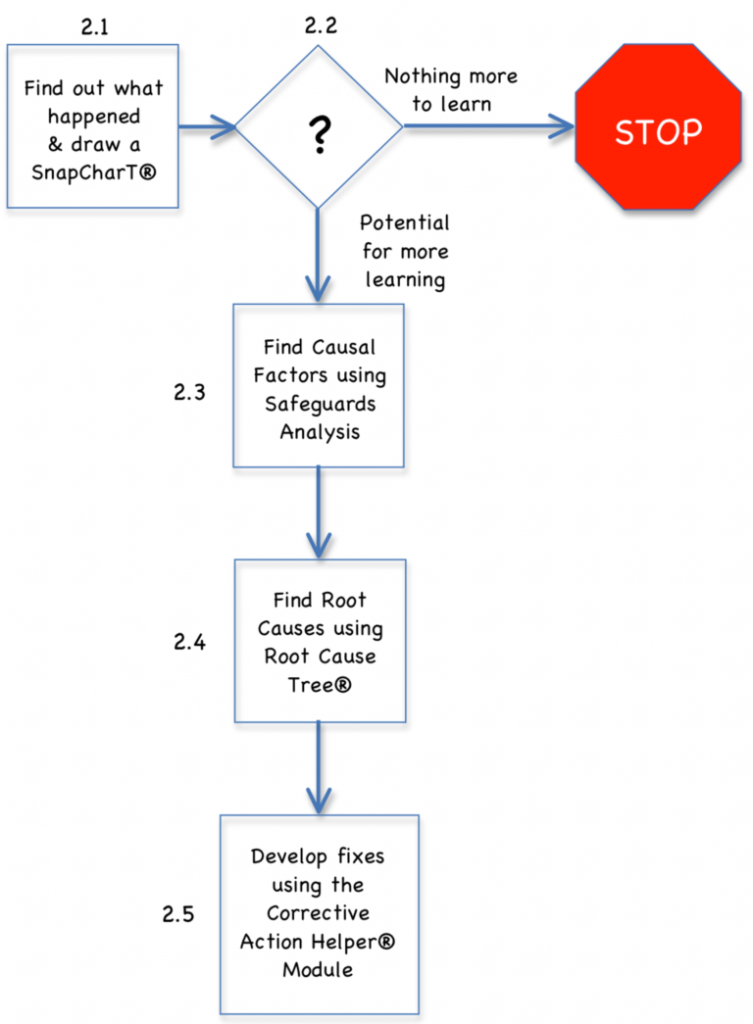
As you can see, the simple process uses the SanpCharT® Diagram, Safeguards Analysis, the Root Cause Tree® Diagram, and the Corrective Action Helper® Module. These are the essential tools used in every investigation.
Perhaps the most significant simplification is the ability to stop investigating after developing a SnapCharT® Diagram if the investigator decides there is nothing more to learn by continuing the investigation.

For major investigations, the TapRooT® 7-Step Process uses the same essential tools plus several optional tools when needed.
Thus, investigators and management only need to be familiar with one set of tools for most incidents (and optional tools for major incidents). In general, management doesn’t ever see the optional tools as part of an investigation presentation.
Also, the more frequent practice that investigators get performing simple investigations provides practice using the same essential tools that are used in a major investigation.
Because the essential tools are so effective, the corrective actions developed for the simple incidents are effective in preventing major accidents.
Also, because the statistics are produced by the same tools, trending across all incident types (including proactive audits and assessments) is simplified.
Thus, TapRooT® RCA can be used for simple and serious incidents.
Can’t Work Across Organizational Boundaries
TapRooT® Root Cause Analysis was designed to analyze and fix all types of human performance and equipment reliability issues, no matter what organization has the problem. That means TapRooT® RCA is a perfect standard to adopt across the company for root cause analysis. It can be used for safety, quality, maintenance, equipment reliability, operations, and even human resources issues.
Therefore, TapRooT® Root Cause Analysis is perfect for all organizations and even cross-organization issues.
Causes Blame
From the start, the TapRooT® Root Cause Analysis System was designed to identify fixable system problems and avoid placing blame on individuals. It doesn’t have the blame categories common in many root cause analysis tools.
For more about how the TapRooT® RCA avoids blame, see THIS ARTICLE.
But what do clients think about avoiding blame by using TapRooT® Root Cause Analysis? Probably the most dramatic example is a union that insisted that a TapRooT® Root Cause Analysis be performed BEFORE any disciplinary action is proposed after an accident.
Start with the Answer
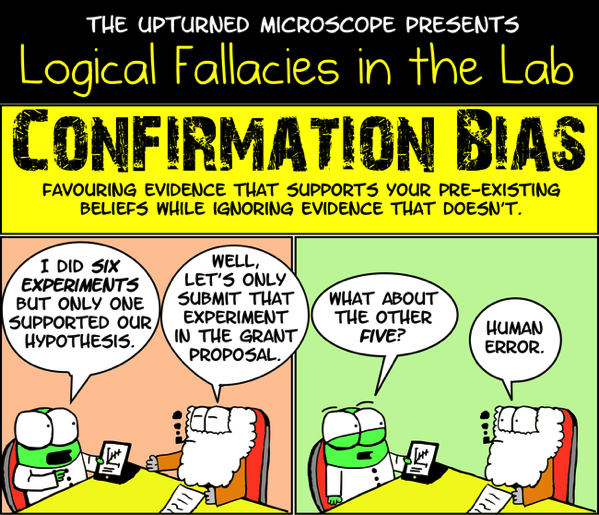
Confirmation Bias is a difficult problem to solve. But the way that TapRooT® Root Cause Analysis starts the investigation helps you avoid confirmation bias. Unlike the scientific method, you don’t start by trying to confirm a hypothesis.
Instead, the TapRooT® System starts by collecting evidence to understand WHAT happened.
Next, the system helps investigators define the Causal Factors that allowed the incident to occur.
Next, the Root Cause Tree® Diagram and Root Cause Tree® Dictionary guide the investigator to the root causes of the Causal Factors.
TapRooT® Root Cause Analysis doesn’t try to confirm a hypothesis. It starts by collecting the evidence to understand what happened and then uses the evidence and guidance from the Root Cause Tree® Diagram to identify and fix root causes. That’s how the TapRooT® System avoids confirmation bias.
The Operators Know the Problems and What To Do to Fix Them
We’ve seen time after time that unguided problem-solving often results in substandard solutions.
Operators do know which tasks are more difficult, but they might not know why they were designed that way.
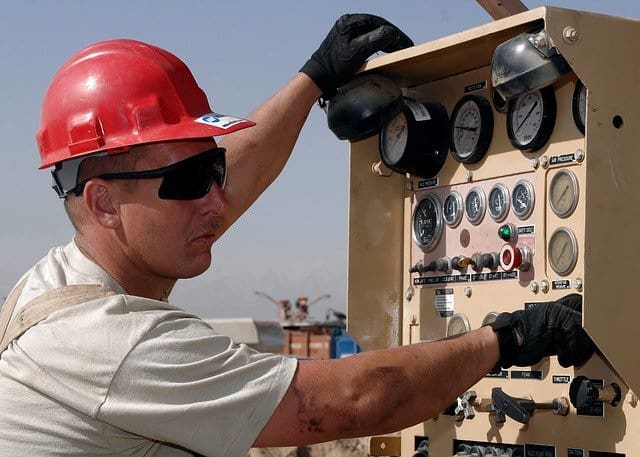
At one facility, engineers did a risk assessment. They found that one of the highest contributors to risk was overthrottling a valve and then having the power fail. It was very important to throttle the valve gradually and never go beyond a certain point that depended on the past production history. They decided that an engineer should be involved in calculating and supervising the throttling of the valve if throttling was needed (this only happened in an emergency). Therefore, they changed the procedure to take out the step that told the operators to throttle the valve. They replaced the step with a requirement to contact engineering before throttling the valve. But they failed to tell the operators about the change or why the change was made.
When the operators were asked to do a walk-through of the procedure, they didn’t contact engineering and started throttling the valve just like they had done in the past.
The operators didn’t see the problem and didn’t do what the procedure said to do. Because they couldn’t see the problem, they couldn’t fix the problem.
When TapRooT® RCA is used in an investigation, a good practice is to involve the system experts. The operators, mechanics, engineers, and supervisors. But the TapRooT® System provides guidance to analyze and develop corrective actions to fix the problem. Guidance that is based on human performance and equipment performance best practices. Guidance that doesn’t seem complex.
Thus, TapRooT® RCA gives people the guidance they need to effectively solve problems, including human factors issues.
Lack of Solid Human Factors Basis
TapRooT® Root Cause Analysis was developed to analyze human errors using a human factors basis.
When a Human Performance Difficulty is identified, the Root Cause Tree® Diagram guides the investigator to the Human Performance Troubleshooting Guide. The 15 questions in the guide direct the investigator to the applicable Basic Cause Categories (human performance best practices) on the back side of the Root Cause Tree® Diagram.
Using the Tree and the questions in the Root Cause Tree® Dictionary guide the investigator to the human performance-related root causes.

The investigator then uses the Corrective Action Helper® Guide to develop fixes based on human factors principles.
The whole system was developed to be easy to use based on human factors principles.
The knowledge embedded in the TapRooT® System came from Mark Paradies’ human factors research at the University of Illinois and other contributors.
What advanced human factors concepts are in the TapRooT® System? The complete list is too long for this article, but it includes:
- The SOR Model of Human Performance
- Knowledge of Advanced Job Performance Aids
- The Systematic Approach to Training (SAT)
- Application of Cockpit Resource Management
- Ergonomics (anthropometrics)
- Communication reliability practices
- An advanced behavior change model
- Charles Hopkins’ human factors theories
- Chris Wickens’ concepts on mental models
- Jens Rasmussen’s Skill-Rule-Knowledge decision-making model
- James Reason’s Swiss Cheese Model of error
- Paradies/Unger’s human performance troubleshooting model
Here’s a sample of the human factors sources used to develop the Procedures Basic Cause Category.

The system was also reviewed by many leading experts, including:
- Jerry Lederer (the father of aviation safety)
- Larry Minnick (nuclear plant safety expert)
- Heinz Bloch (equipment reliability guru)
- Dr. Alan Swain (human reliability expert)
- Dr. Anne Ramey-Smith (human factors researcher/analyst)
Some systems claim to have a human factors basis, but the system itself isn’t designed with human factors in mind.
The TapRooT® System has a solid human factors basis, and the TapRooT® Root Cause Analysis System was designed by human factors experts and reviewed by even more experts.
No other system meets this test. TapRooT® RCA has an exceptional human factors basis to provide expert guidance without complex jargon.
Lack of Equipment Troubleshooting Tools

We licensed equipment reliability guru Heinz Bloch’s equipment troubleshooting techniques to develop the Equifactor® Equipment Troubleshooting Techniques that are built into the TapRooT® RCA System. Those techniques were then incorporated into the TapRooT® Software. Thus, the TapRooT® Root Cause Analysis System is great for troubleshooting and root cause analysis of equipment issues.
Lack of a Solid Management System Basis
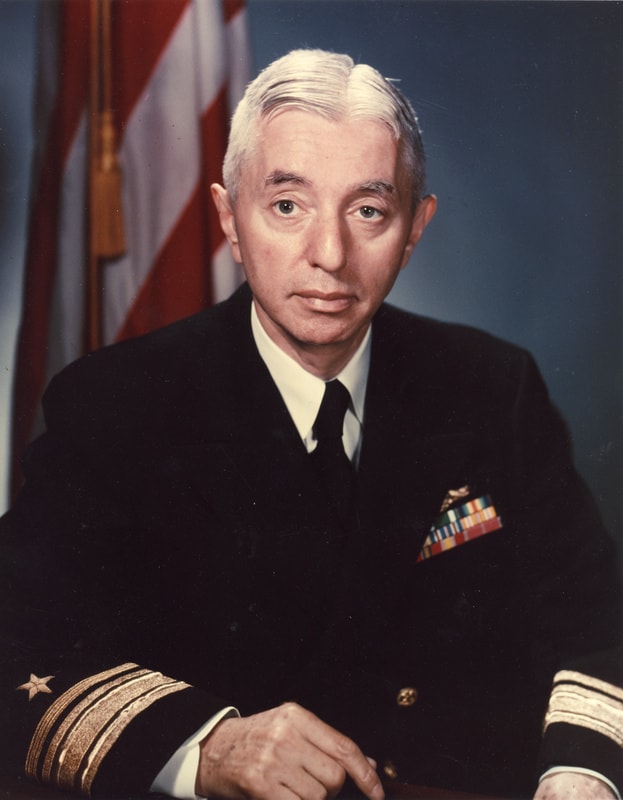
We invented the term “Management System,” and the tool to identify Management System root causes. The management system basis includes lessons learned from Admiral Rickover’s high-reliability organization – the Nuclear Navy. Thus, the TapRooT® System has the best management system basis of all root cause techniques. Use TapRooT® RCA to improve your management system.
No Guidance for Development of Corrective Actions
One of the many improvements we made to the TapRooT® System was the Corrective Action Helper® Guide or Module in the TapRooT® Software. We developed a system for suggesting potential corrective actions for every root cause on the Root Cause Tree® Diagram.

How does the Corrective Action Helper® Guide/Module work? It starts by checking that you are fixing the right root cause. Here is an example for the root cause “Labels Need Improvement.”

Next, the Corrective Action Helper® Guide/Module provides ideas for correcting the root cause…

Next, the Corrective Action Helper® Guide/Module provides ideas for correcting Generic Causes…

Finally, The Corrective Action Helper® Guide/Model provides references for the investigator to learn more about the problem…

That’s one example of guidance for one particular root cause. There are many more in the guide.
But that isn’t the only guidance for corrective actions in the TapRooT® Root Cause Analysis System. We teach people to make SMARTER corrective actions and to use the Safeguard Hierarchy to develop the strongest possible corrective actions.

Corrective Actions Aren’t Tracked to Completion
The TapRooT® Software helps you track your corrective actions to completion. Optionally, you can schedule verification and validation of a corrective action. If you choose, you can use an API to connect the TapRooT® Software to your QHSE software and track your corrective actions in your QHSE software.
Lack of Testing
The TapRooT® System, Training, and Software have been through extensive testing, including:
- Development testing,
- User testing,
- Regulatory testing, and
- Software Beta testing.
Plus, System Improvements has a TapRooT® Advisory Board of over 60 users who provide improvement ideas and help test changes (improvements) to the system.
When you use TapRooT® Root Cause Analysis, you can rest assured that the system you are using has been tested before you ever try it.
Little Continuous Improvement
The testing that System Improvements conducts is the start of continuous improvement. Every course, every year, the root cause system, training, and software get better and better.
This testing and continuous improvement have been applied for 38 years. No system comes close to the testing and continuous improvement legacy of the TapRooT® Root Cause Analysis System.
Here is what one of our long-term TapRooT® Users had to say…
Since my first introduction to TapRooT in 2013 as a 2-Day Essentials Training attendee, I can honestly say I have not worked with another company that cares more about keeping our people safe than TapRooT. Their desire to constantly improve their tools & willingness to listen to my feedback make me feel more like a business partner than a customer.
Lack of User Support
How is the TapRooT® Root Cause Analysis System supported?
First, we have a TapRooT® Super-User Group that you can participate in. They share success stories and best practices that you can learn from. The Super-User Group is a great place to benchmark your practices against industry leaders.
Second, every 18 months, we sponsor the Global TapRooT® Summit to share new improvement ideas and best practices. How can the Summit support your improvement efforts? Here is what Amy Souders has to say…
Plus, on the Monday and Tuesday of the Summit, we have optional pre-Summit Courses. Here is what Alex Paradies has to say about the pre-Summit Courses…
See the courses available this year at THIS LINK, and think about how these courses might support your improvement journey.
We also have a blog that is full of best practices and improvement ideas, and a weekly newsletter to keep you up-to-date. (Register for the blog at the bottom of this page.)
We also have a TapRooT® User and Friends LinkedIn Group for sharing ideas and keeping up with TapRooT® System announcements.
Our TapRooT® Implementation Experts will help you build a Roadmap to Success for your improvement efforts. A Roadmap to Success that is based on industry best practices that they have learned over hundreds of implementations.

Plus, if you have questions about anything related to root cause analysis, you can call us at 865-539-2139.
Do you need someone to coach your team and teach them how to solve a difficult problem? We have expert TapRooT® Facilitators around the world.
That’s world-class support for a best-in-class root cause analysis system.
Little International Support
The TapRooT® System is supported by instructors and facilitators around the world.
The software has built-in translation capabilities.
TapRooT® Root Cause Analysis is used on every continent (except Antarctica).
Can you think of any better worldwide support?
Only Works in One Industry
What industries successfully use TapRooT® Root Cause Analysis? Here is a sample…
Oil Exploration and Production, Pharmaceuticals, Utilities, Airlines, Wind Turbine Manufacturing, Instalation, and Maintenance, Semiconductor Manufacturing, Pipelines, Railroads, Chemicals, Food Manufacturing, Engineering and Construction, Nuclear Power Plants, Healthcare, Mining, Aviation Maintenance, Agriculture, Regulators, Nuclear Fuel Manufacturing, Defense, Oil Field Services, Shipping, Refining, Aviation Manufacturing, Electric Transmission Line Maintenance, Metals Refining, and Government Contracting.
And that’s just a sample. If TapRooT® RCA works in all these industries, it will work in your industry too.
Can’t Be Used Proactively
TapRooT® Root Cause Analysis can be used both reactively and proactively. See THIS ARTICLE for some ideas.
No or Little Software

TapRooT® Software was the first root cause analysis software and is still the leader to this day. Find out more about the TapRooT® Software HERE. Also, watch for our upcoming optional AI solutions being released starting this Summer.
If you would like more information about our approach to AI for root cause analysis, and perhaps become one of our beta testers, just fill out the form at the link below…
https://share.hsforms.com/1OdJTTDdvToCCteEXFMxicA21qm6
NO DOUBT – TapRooT® RCA is the Best!
Every potential fatal flaw is addressed by the TaprooT® System. No other system comes close. If you want to avoid all 20 root cause analysis system fatal flaws, you should be applying the world-class TapRooT® Root Cause Analysis System to all your issues throughout your company.
If you want to learn more about implementing the TapRooT® RCA System, call us at 865-539-2139 or CLICK HERE.