How Far Away is Death?

How far away is death? From close calls to tragic accidents, these incidents are equally shocking as insightful.
Tune in every Thursday to see the newest edition, or scroll down to browse previous topics.
Experienced pilot perishes in crash
October 22, 2026
The pilot, Ronald R. Reik, was a community leader who had done fundraising for plane crash victims. Reik died while flying a fixed-wing Piper with five passengers back from Kenosha to Menomonie, Wisconsin. All five adults and a child perished in the crash.
The National Transportation Safety Board (NTSB) is investigating the accident and has reported that the Piper PA 46 was at 24,000 feet when Riek radioed to report icing and a request to begin a descent.
The Sauk County sheriff confirmed the pilot had talked with the tower prior to the accident. NTSB noted that air traffic control had approved the descent and reported that after a right turn and acceleration, the aircraft’s communication and the tracking of its data were cut off.
We know from the FAA that icing during a flight can:
- change the way air is flowing over an aircraft
- increase the occurrence of drag
- have an effect on the way an aircraft reacts to being handled
- effect an aircraft to stall when at higher speeds and at lower angles, possibly causing the craft to move in unrecoverable ways
Plane drops 27,000 feet
October 15, 2026
A British Airways flight departed from London Heathrow Airport at 11:50 am on October 5, 2026, bound for Chicago O’Hare International Airport. Over Ireland, around 30 minutes into the transatlantic flight, the Boeing 777-200ER suddenly plummeted from 37,000 feet to 9,000 feet—all in less than 10 minutes. Oxygen masks deployed in the passenger cabin and the plane made a U-turn to return to London. The plane circled for a few hours before landing back at Heathrow.
Aviation experts have suggested the aircraft’s rapid drop could have been a cabin pressurization issue.
Worker dies at meat plant
October 8, 2026

A worker died in a machinery accident at a Smithfield Foods meat production plant in Monmouth, Illinois, September 14, 2026. Workers walked off their shifts as they did not know what was supposed to happen following the accident. The fatal incident occurred during the night shift.
The Smithfield Foods fatality is currently being investigated by law authorities, company officials, and OSHA.
Death was apparently right around the corner
October 1, 2026

My first full shift at a hotel seemed like it was going to end without any hiccups. (Looking back, that was pretty miraculous. We were short-staffed, so I was completely alone with effectively no formal training.) It was a slow day, so I was just standing around at the front desk for the most part.
Then, about 5 minutes before my shift was over, a guest with a pale look on his face walked up to the desk and whispered, “Someone is injured at the pool. She needs help.”
The pool was closed for maintenance, so I was a bit puzzled. I couldn’t see anything on the cameras, so I began to walk there to see for myself.
I was stopped by my coworker, who just so happened to be early that day. With the same unsettled expression as the guest, she said, “I already called 911. You can go home for the day.”
I felt a little uncomfortable leaving in the middle of such an apparently serious situation, but she was adamant that she could take care of this. I eventually did leave, passing my an ambulance and a fire truck with blaring lights.
The next day, I asked my boss what happened. He explained to me:
“Our maintenance man lived at the hotel. I told him that his girlfriend was no longer welcome here because she had been causing trouble. He invited her here behind my back. From his room, she took some kind of hallucinogenic and fell from the balcony onto the concrete.”
“Is she okay?”
He shook his head and said, “I fired the maintenance man.”
This week’s edition was written by Jacob.
Death by MRI
September 24, 2026
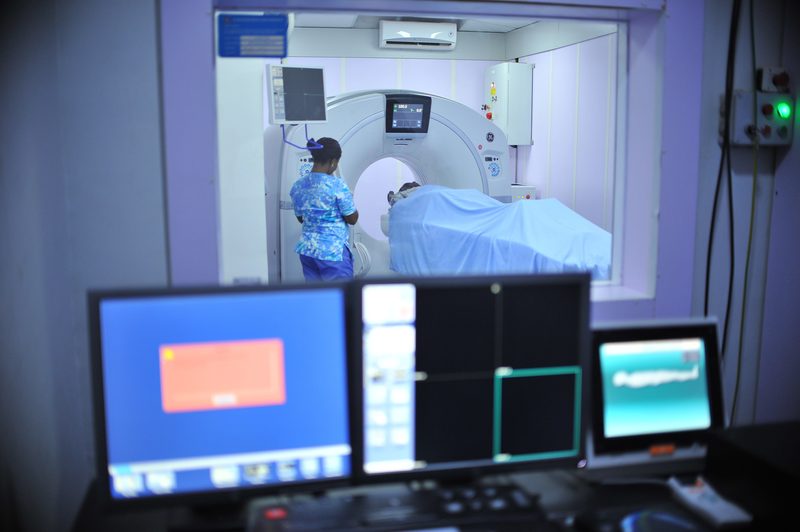
Keith McAllister was wearing a 20-pound metallic weight-training chain around his neck when he walked into Nassau Open MRI facility in New York. McAllister’s wife was undergoing an MRI for her knee and had trouble getting off the table. A technician summoned McAllister to help his wife and brought him into the room while the machine was still active. In a turn of events, the heavy chain caused a forceful magnetic reaction, drawing McAllister into the MRI machine. He died after suffering multiple heart attacks.
Could AI take out humanity?
September 17, 2026

The upskill pace of AI is dizzying even for the companies working on AI. For instance, last year AI could solve a task in four minutes and this year a 40-minute one.
Now, we’re realizing that AI can outpace our management of it. So, the question of the month has been, Can AI put an end to humanity or compromise it in a definitive way?
Engine blade hits airplane window
September 10, 2026

Not only did the engine blade hit the window of the Ryanair aircraft taking off in Thessaloniki, Greece, the window shattered and a male passenger’s head was sucked out of the window. Passengers, including his wife, pulled at his legs and body to rescue him. He survived the horrific ordeal with friction burns, damages to his head and neck, and shock.
What happened to cause the engine blade to hit the window of the Ryanair plane? The National Transportation Safety Board (NTSB) reported that it found parts of a bird on a fragmented engine. The flight had reached 16,000 feet over Thessaloniki—about 10 minute following takeoff—when the engine began reverberating. The shaking within the airplane grew stronger and a clearly audible boom was heard throughout the aircraft. The passenger oxygen masks dropped as the altitude warning sounded.
Missing people among flood in Nepal
September 3, 2026

Here’s what we know for now from the 8:37 am glacier collapse and flash flood on Wednesday, August 26, 2026.
- Emergency crews continue searching for thousands of missing people on the Nepal-China border in the aftermath of a glacial collapse.
- Estimation of unaccounted for in Nepal is currently 4,274, including more than 500 foreign nationals.
- Estimation of unaccounted for in Tibet is 16 deaths, 546 missing.
- The current death toll in Nepal is 903.
- More than 10,400 people have been rescued by relief teams.
- River erosion has inflicted transport routes.
- Rescue teams are working on tunnels at several affected hydropower sites where many workers had been trapped.
Siblings and an explosive device
August 27, 2026

Federal charges have been placed against siblings—a brother and a sister—and indicted with placing an explosive device, an IED, at MacDill Air Force Base in Florida. The sister has been placed in custody and the brother fled to China.
Here is further information.
Lake Michigan claims beloved teacher, brother
August 20, 2026

A very popular Adams High School life skills teacher, Hannah Zweig, 21, and her brother, Yosef, traveled to Lake Michigan on a family trip from their South Bend, Indiana, to swim. The pair drowned during the water recreation.
Zweig had stated upon choosing life skills for her teaching career that her developmentally disabled brother was a key factor in her choice.
Principal Jim Seitz at Adams High School described recognizing the beloved teacher’s “clear compassionate vision for her career” when she initially reached out to him for the position: “I actually received an email from her about two years ago, explaining that she was finishing up her degree and she would be interested in a life skills teaching position at Adams High School. And you could see from the tone of her email the compassion that she had for young people, especially young people with special needs.*
“As a life skills teacher, you have a responsibility to literally work with your students from the moment that they get off of the bus in the morning to the moment that they get back on the bus in the afternoon. Hannah communicates with her parents of her students greater, quite frankly, than any teachers that we have.”*
Her exceptional work did not go unnoticed. The South Bend Community School Corporation awarded Hannah Rookie Teacher of the Year this past school year.
But her impact reached far beyond standard classroom hours. Seitz noted that Hannah was always looking for ways to lift up those around her, whether organizing school-wide initiatives or highlighting the work of her colleagues.
WNDU News 16 tells us that “her exceptional work did not go unnoticed. The South Bend Community School Corporation awarded Hannah Rookie Teacher of the Year this past school year.”*
Content source/credit: *WNDU News 16, “Beloved Adams High School teacher, sibling die in Lake Michigan drowning,” by Joshua Short, published August 5, 2026.
Subduing a threat
August 13, 2026

A passenger became a threat on a flight from San Juan, Puerto Rico, to Chicago. First, the Frontier Airlines passenger tried to open an exit door. Next, he attempted to force the cockpit door. Then, he started choking an off-duty flight attendant until fellow passengers and on-duty attendants stopped him and ultimately tied him down with a seat belt. One of the key heroes was a Chicago martial arts instructor.
Due to the danger, the flight was diverted to Miami International Airport, where the offending passenger was charged with maritime and territorial jurisdiction assault and abuse of flight attendants.