They Should Have Known Better

New Root Cause?
I had someone suggest a new root cause to add to the TapRooT® Root Cause Tree® Diagram. The new root cause was:
They Should Have Known Better
However, this new root cause didn’t fit the definition of a root cause:
ROOT CAUSE DEFINITION
The absence of a best practice
or the failure to apply knowledge
that would have prevented the problem.
Let’s look at “should have known better” in detail and see why it doesn’t fit the definition.
Exploring Should Have Known Better
The obvious question for this conclusion is…
How Should They Have Known Better?
The question to start with is, what assumptions did you make when saying they should have known better?
For example, if the person touched a hot surface:
- How did they know it was hot?
- Should they have had explicit training?
- Why was the surface unprotected?
- What caused them to touch it?
- Did they have any circumstances that could have led to a bad decision (to touch the hot surface)?
There are many factors to consider before you conclude that this was careless or stupid.
I’ve seen many accidents that, at first, looked like “They should have known better,” but, when you looked at the facts in detail, there were reasons for mistakes that are already on the Root Cause Tree® Diagram and could have been corrected to prevent the incident.
The Root Causes Are in the Tree
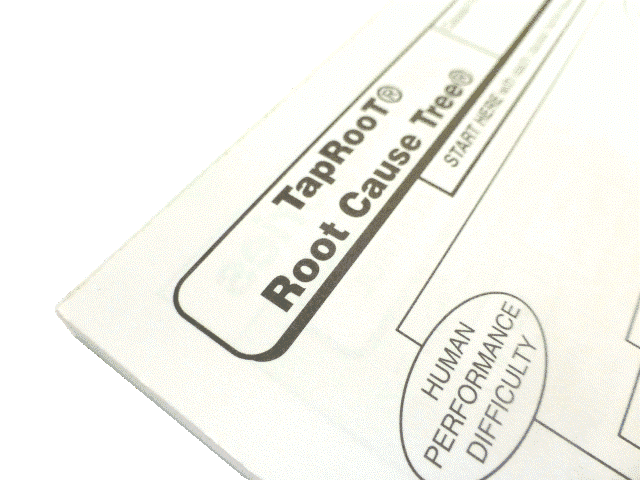
When we first developed the Root Cause Tree® Diagram back in the 1980s, we said that 95% of the root causes would be found using the tree. Over the years, the Root Cause Tree® was improved with new categories and better definitions in the Root Cause Tree® Dictionary. We now believe that it covers 99% of the root causes.
What does that mean? If you use the TapRooT® System, develop a thorough SnapCharT® Diagram that completely describes what happened and defines the incident’s Causal Factors, the Root Cause Tree® Diagram and Dictionary will help you find fixable root causes for your Causal Factors. You won’t need to add new root causes to the Root Cause Tree® Diagram.
If you would like to learn more about the TapRooT® System and the Root Cause Tree® Diagram, and how it can help you find and fix the causes of:
- safety-related accidents
- quality issues,
- equipment outages and failures,
- operation problems,
- environmental incidents, or
- other problems,
Contact us by calling 865-539-2139 or CLICKING HERE.
To get more information about TapRooT® Root Cause Analysis Training, CLICK HERE.
And to see the locations and dates of our upcoming public TapRooT® Training, CLICK HERE.