Proving the Value of a Root Cause Analysis

Big Mistake: Not Proving RCA Value
Root cause analysis is often applied after a major accident or serious precursor incident. Investigators are often relieved when management accepts their recommendations without a serious grilling.
Management is relieved to have an answer to their problem and to see operations go back to normal.
What is missing? The celebration of an investigation well done.
Also, the value of reliably finding root causes:
- the money saved,
- the lives saved,
- the injuries prevented,
- the quality improvements achieved,
- the equipment reliability improvements accomplished,
- the improvements to operations achieved.
If you have a superior root cause system and excellent investigators, don’t let the opportunity pass to show management what they have been paying for and the return on investment achieved.
If you don’t have measurements of success, management won’t value what’s achieved, and the next time budget cuts are discussed, the cost of great root cause analysis might be cut. After all, there are always cheaper, easier, less reliable root cause methods. And that is a BIG mistake.
What Measures Should Management Monitor?
To prove the value of your root cause analysis efforts, you need to have a performance baseline:
- What is the cost of human errors and equipment failures?
- What are workers’ comp costs?
- What are the costs of quality rework and customer complaints?
- What are the costs of lost production time and repairs due to equipment failures?
Note that there is likely overlap between these categories, so you will need to be careful when devising trending techniques. Note that these aren’t just counts of errors. They represent value as measured in dollars. There is a reason for this, but explaining it would require a complete article.
To get more information about advanced trending techniques, you should read the book: Performance Measures and Trending for Safety, Quality, and Business Management. You can order it HERE.
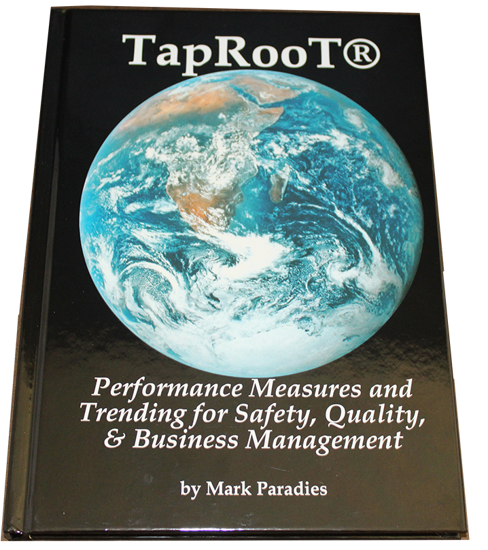
Because reactive measures are slow to prove improvement, you should also consider developing proactive measures for the most critical management improvement initiatives. Both reactive and proactive trending are covered in the book mentioned above.
Learn More
If you would like to learn a superior root cause analysis system, you should attend a 5-Day TapRooT® Advanced Root Cause Analysis Team Leader Course. See all the upcoming public course types, dates, and locations HERE. Or schedule a course at your site by contacting us HERE.

What can a TapRooT® Root Cause Analysis Course help you accomplish? CLICK HERE for success stories submitted by TapRooT® Users. Perhaps your company will be submitting a success story next year?
After reading the trending book, if you still need help setting up your trending program, contact Alex Paradies at System Improvements by CLICKING HERE. He will be glad to provide free advive over the phone or more extensive consulting if needed.