Benefits of First-Class Root Cause Analysis

#1: Simplest Benefit
Let’s get the most obvious benefit of first-class root cause analysis out of the way right now. The #1 benefit of first-class root cause analysis is preventing repeat incidents. FULL STOP.
That should be enough to justify your efforts to implement a first-class root cause analysis system.
But somehow, people often lose track of this real value and instead try to get 80% of this benefit with 20% (or less) of the effort. After all, doesn’t the Pareto Principle guarantee you can get 80% of the value by applying just 20% of the effort?
Joseph Juran (a quality guru) coined the term Pareto Principle (the 80/20 rule). He named it after an Italian economist, Vilfredo Pareto. In 1848, Vilfredo discovered that 80% of the wealth (land) in Italy was held by just 20% of the population.
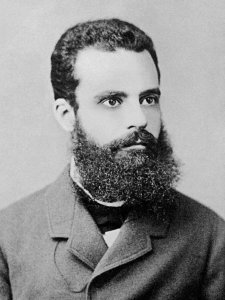
Did Vilfredo say the wealthy put in only 20% of the effort to get 80% of the wealth? No. Did Vilfredo draw a Pareto Chart? No! He didn’t draw any chart.
Actually, William Playfair drew the first chart that looked something like a Pareto Chart in 1781. That’s before Vilfredo was born.
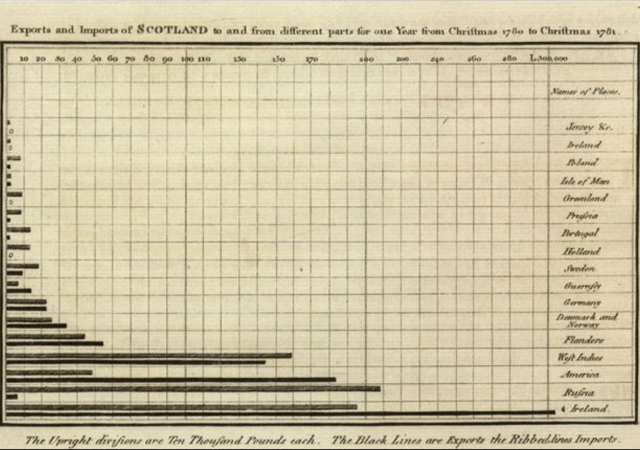
Playfair’s chart above shows the value of Scotland’s imports and exports by country. It shows that 80% of imports come from just four countries (20%). It says nothing about the effort required.
However, no matter what the evidence shows, management has been led to believe that small amounts of effort can accomplish almost as much as true hard work.
Read that last sentence again. Do you really believe a little effort can accomplish a goal that requires real hard work?
If you attended 20% of a college class, do you think you could score 80% on the final exam?
The concept is truly ludicrous.
Yet, many would like to believe it because they have been convinced that they can get something for nothing.
Let’s get this straight. Putting little effort into using a second-rate root cause analysis technique won’t yield first-class results (preventing recurrence of an issue).
It takes a first-class system diligently applied to get first-class results and the benefit of preventing recurrence of an incident (plus the other benefits below).
#2: Happy Management

I’ve heard several people say their management wants investigations completed quickly with as little effort as possible. That is why their company uses 5-Whys.
Little effort with a poor system usually works until the company:
- Has the inevitable major accident (fatality or multiple fatalities).
- Loses a major client because of poor quality.
- Suffers a public relations nightmare and major fine because of a significant environmental release.
- Experiences a major loss of production because of a production outage.
- Misses a schedule deadline, or has a significant cost overrun.
These are just some examples of the types of incidents that can get your management fired.
Happy management doesn’t want to experience any of the above negative outcomes. Smart, happy managers are willing to invest in first-class root cause analysis to investigate precursor incidents, implement effective improvement strategies, and achieve operational excellence (high reliability).
#3: Happy Regulators
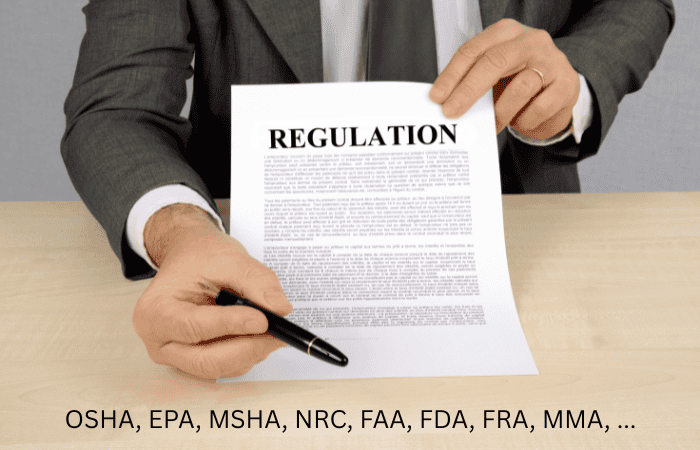
Do you think that your regulators want to send investigators to your site when you experience a regulatory-related accident? NO! They would much rather you follow regulatory requirements and avoid accidents by investigating precursor incidents and proactively auditing performance to spot and remove problems before accidents happen.
So, what makes a happy regulator? The absence of regulatory violations. And certainly zero major accidents. Regulators love it when companies proactively prevent problems. If you stay off the regulator’s radar with excellent performance, you will keep them happy.
The easiest way to do this is to apply first-class root cause analysis both reactively (to investigate precursor incidents) and proactively (through effective audits and assessments).
#4: Happy Shareholders

What makes shareholders happy? Consistently meeting or exceeding stated goals for revenue and profitability.
What do accidents do? Cause you to miss stated goals.
So, applying first-class root cause analysis can help you avoid serious accidents and incidents and keep your shareholders happy.
#5: Happy Employees

What do employees hate?
- Being injured.
- Being blamed and disciplined for incidents.
- Seeing other employees get hurt or fired.
- Lying about being involved in an incident to avoid blame and discipline.
That’s just a short list.
We’ve seen unions request first-class investigations BEFORE a company takes disciplinary action. Why? Because a first-class root cause analysis uncovers system-related causes of an accident and doesn’t blame the individual.
So, a first-class root cause analysis results in happy employees.
What is First-Class Root Cause Analysis?
If first-class root cause analysis results in:
- Preventing Repeat Incidents
- Happy Management
- Happy Regulators
- Happy Shareholders
- Happy Employees
Maybe it is time to ask…
What is First-Class Root Cause Analysis?
We can answer that easily.
TapRooT® Root Cause Analysis IS
First-Class Root Cause Analysis.
If you want to learn about first-class root cause analysis, CLICK HERE.
CLICK HERE to learn about the various TapRooT® Root Cause Analysis Courses.
To learn more about our award-winning, patented TapRooT® RCA Software, CLICK HERE.
Or watch this video from Worldwide Business hosted by Kathy Ireland, who invited Mark Paradies as a guest…
To talk to one of our Root Cause Analysis Implementation Experts, call them at 865-539-2139 or CLICK HERE to drop one of them a note.