Don’t Forget What You Have Learned

A “Solved” Problem Reoccurs
You perform a root cause analysis or have a proactive improvement effort and find and fix a problem that has been troubling your company for years. It’s time for a celebration!
Not so fast. How many times are problems solved and then, years later, they come back? And the lessons learned have to be relearned. Don’t let people forget what they have learned.

In Francis Duncan’s book, Rickover and the Nuclear Navy, Admiral Rickover is quoted as saying:
Nothing was final – that was the hardest lesson to learn.
Men do not stay trained. No matter how firm or how formally
procedures were promulgated, the insidious and subtle
process of erosion sets in at once.
Only the Commanding Officer can stop the process.
Take the matter of formality – giving and acknowledging commands and
reporting data in exact prescribed terms. Inevitably, men became slack and
took to slang or private jargon. Misunderstanding was bound to occur,
and accidents had no better breeding ground than the haze of confusion.
Perhaps you have seen this? Performance improves, but then sinks back to a new low, either slightly better or worse than it was before. (as shown in the graph below). Did they forget what they learned?

What Contributes to Un-Learning?
Many things can contribute to un-learning previous lessons learned. They include:
- Habit intrusion.
- Doing things the “easy” way.
- Never really solving the problem to start with.
- Management inattention.
- Management misdirection.
- Flavor of the month syndrome.
- Lack of continuous reinforcement.
As time passes with no reinforcement, things tend to get worse. People slip back into old habits. They choose the easy or fast way to do things. They take a shortcut “just once” and it turns into the standard. Ph.D’s call this normalization of deviation. People in the field often say:
“This is how we’ve always done it.”
Management often has a major effect on declining performance. They see one problem “solved” and move on to the next. This can lead to people believing that all improvements are just the flavor of the month.
Even worse, the initial improvement may be caused by the “Hawthorne Effect.” No real, permanent improvement actually happened. Instead, there was a temporary improvement because people were watching. The real problem was never solved, so performance naturally returned to the mean. This is officially called “regression to the mean” in mathematics.
Of course, management can also cause performance declines by cutting budgets or insisting on meeting unrealistic schedules or goals.
Discussing Performance Improvement
Would you like to learn more about performance improvement and discuss performance improvement best practices? You should attend the 2025 Global TapRooT® Summit in Knoxville, Tennessee, on October 1-3. And if you are interested in improving human performance, you should attend the pre-Summit Course titled:
on September 29-30.
The best practices to improve performance are explored in depth in the Summit’s Improvement Program Best Practice Track, which was organized by Tim Diggs.
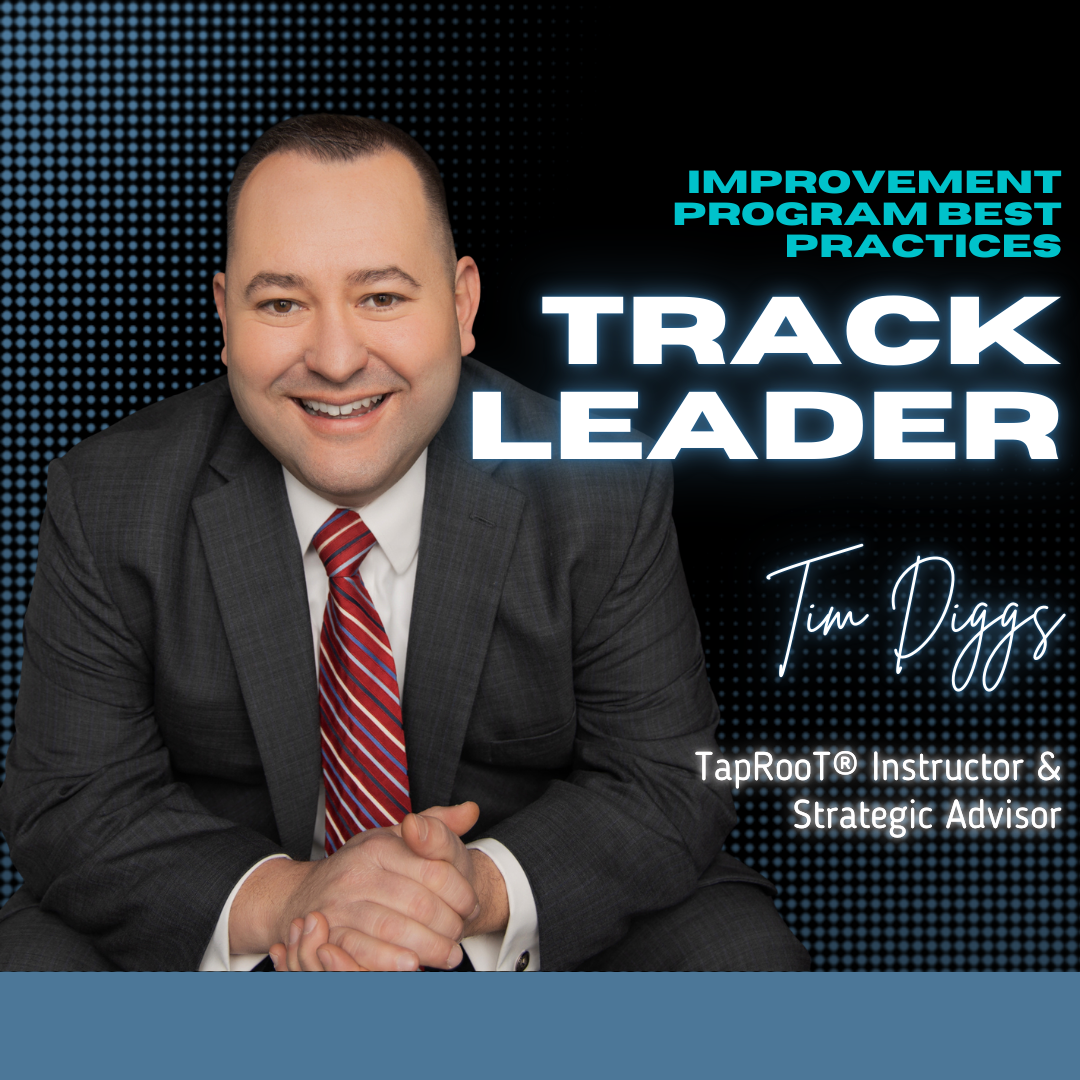
What’s in the program? See the figure below…

CLICK HERE for details about each of the nine sessions in the track.
Mark Paradies will lead one of these sessions: Essence of Performance Improvement.
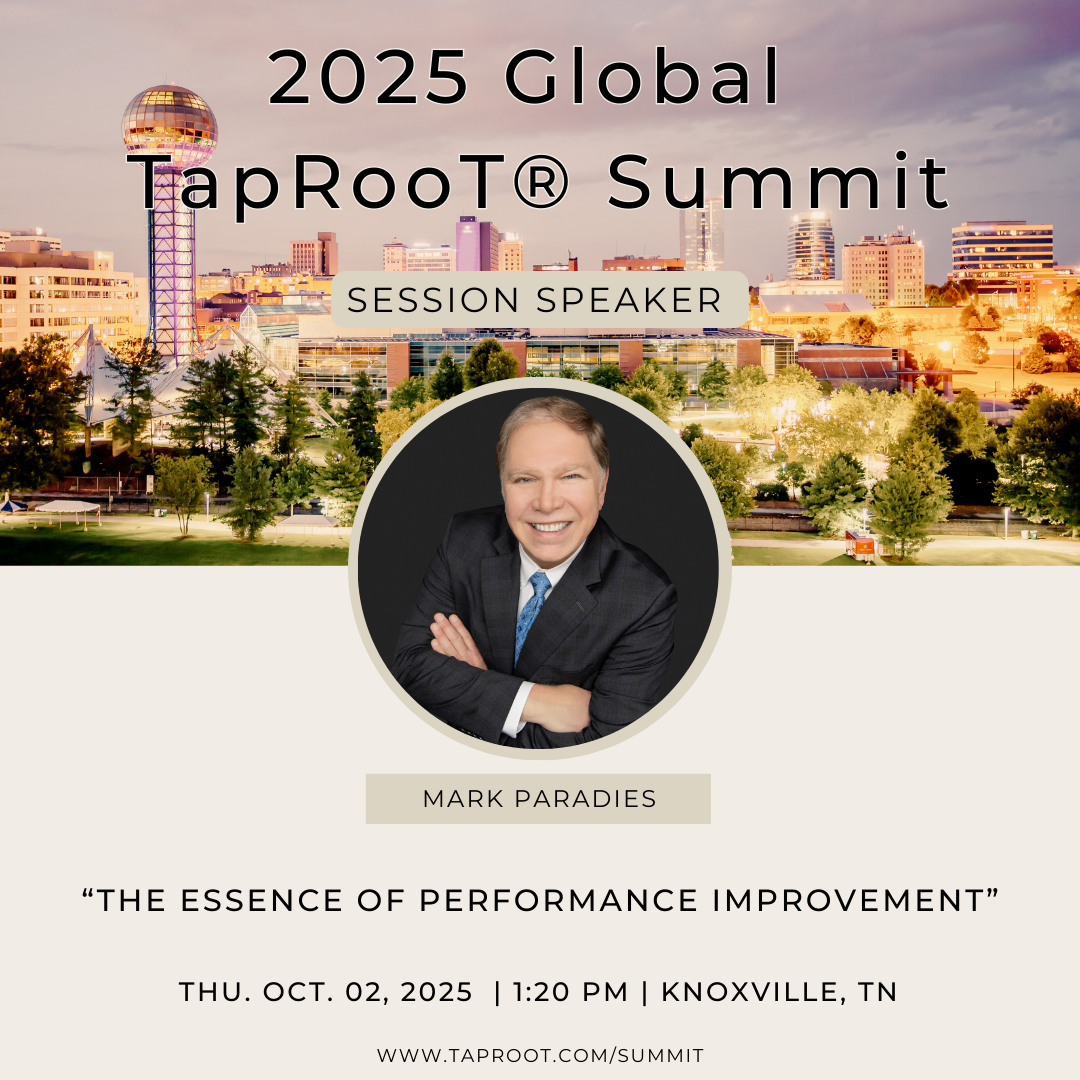
Find out what it takes to create and maintain a successful performance improvement program. Mark will discuss:
- The 15 improvement “musts” from the book, Root Cause Analysis Implementation.
- Learning from failure.
- Courageous impatience.
- Nothing is ever final.
- Rising requirements.
- Infinite personal attention – “The devil is in the details.”
- Time is your enemy.
- You get what you inspect.
These observations are from over 35 years of building performance improvement programs and coaching others to improve their programs. Once this knowledge is shared, ask questions and share your best practices. Learn to make your improvements sticky so people don’t forget what they have learned.
Don’t miss this opportunity to take your improvement efforts to the next level.
REGISTER for the Summit
and the course today.