Are You Ready to Stop SIFs?

What is a SIF?
A SIF is a significant injury or fatality at work. No one argues over what is a fatality. If you find yourself in an argument over what is a significant injury, it probably was a significant injury.
Worker’s Compensation Oregon defines a serious injury as:
“…a life-changing event, for example: major head injury, spinal cord injury,
amputation, catastrophic fractured bones, and serious burns.”
There are also potential SIFs (PSIFs). A potential SIF is an incident that could have resulted in a SIF if one additional Safeguard had failed. These incident types can be called “precursors.” An example of a precursor incident (PSIF) is shown below…
Most companies conduct root cause analyses for all SIFs and PSIFs.
For more information about SIFs, see THIS LINK.
Evaluate: Are You Ready to Stop SIFs?
If I asked 100 managers if they wanted to prevent SIFs, all 100 would say:
“YES!”
But are they really ready to stop SIFs? How much energy and investment are they willing to put into it? That is the real test of whether you are ready to stop SIFs.
So, let’s look at a few categories of SIFS and what a manager really needs to commit to to stop SIFs.
What Causes Your SIFs?
In general, there are three categories of the causes of SIFs at work:
- Mobil equipment accidents (including vehicle accidents).
- Industrial and construction accidents.
- Process safety accidents.
Mobile equipment accidents are typically related to striking a pedestrian or colliding with an object or another piece of moving equipment.

Industrial or construction incidents are the common “safety incidents” that everyone seems to understand. They are usually prevented by applying “life-saving rules.”
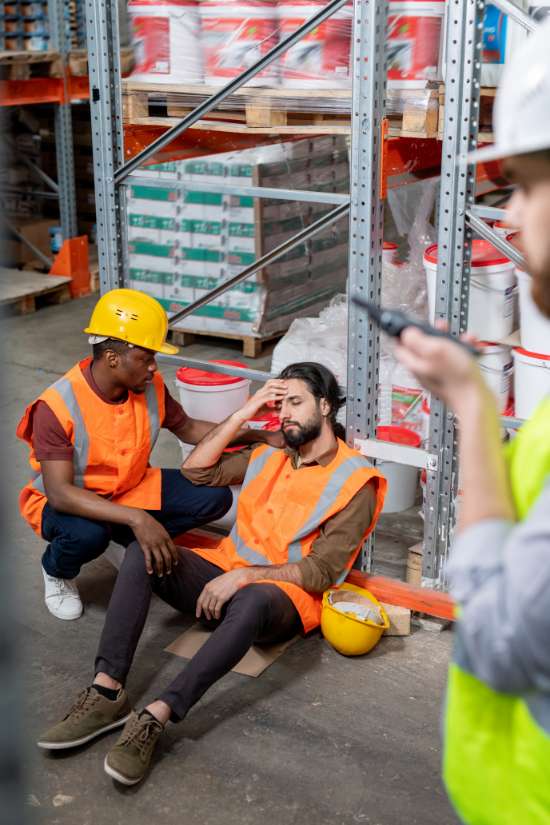
What is a life-saving rule? Here is a sample of the “10 life-saving rules” used by one company:
Ten Life-Saving Rules:
- Work with a valid permit when required.
- Obtain authorization before entering a confined space.
- Verify isolation and zero energy before work begins (Lock, tag, and try).
- Obtain authorization before overriding or disabling safety controls.
- Protect yourself against falls when working at heights.
- Plan lifting operations and control the area.
- Follow the rules for working in toxic gas environments.
- Follow safe driving rules.
- Keep yourself and others out of the line of fire.
- Control flammables and ignition sources.
Notice that there is some overlap between these rules and the other two SIF categories.
Finally, there are process safety or reactor safety accidents that can cause multiple fatalities or injuries.
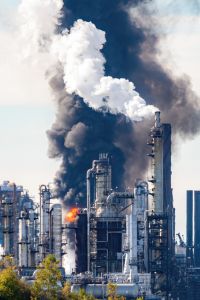
The reason I examine each of these categories separately is that the controls used for each category are usually either slightly or radically different. And the investment in time and money for prevention should probably be budgeted separately. Additionally, the trends of improvements (or declines) should be displayed on separate graphs.
What Are Your Hazards and Safeguards? How Strong Are Your Safeguards?
For the three categories of SIFs (mobile equipment, process safety, and industrial/construction safety), think about the hazards in each category. Here is a simple example of a Hazard, a Target, and a Safeguard…

For example, consider the following types of mobile equipment. Does your company have:
- Company cars
- Personal cars used for company work
- Forklifts
- Dump trucks
- Road graders
- Bulldozers
- Excavators
- Tractors
- Bobcats
- Mobile scisser llifts
- Bucket trucks
For each piece of equipment, you could identify potential hazards and Safeguards to prevent them from causing problems. For example, forklift hazards could include:
- Forklift striking an employee
- Forklift striking another forklift
- Forklift striking another vehicle
- Forklift falling off a loading ramp
- Forklift striking a building
- Forklift striking racking system
- Overloaded forklift spilling the load and hitting something
The more forklift experience you have, the more of these potential hazards you will be able to identify.
For each of the hazards, you could think of the Safeguards you have in place to prevent the hazardous forklift from striking an object. For example, you might have designated forklift paths with a barricade between the forklift and pedestrian walkways.
You could rate your Safeguards using the Safeguard Hierarchy…

If possible, you could remove the hazard.
Next, you could remove the target (in this case, the human) by keeping them on the other side of a barrier.
How could this Safeguard fail? One example would be the person jumping over the barrier to make a quick adjustment to some equipment on the other side of the guard.
Thus, even strong Safeguards can fail. But they are less likely to fail than weak Safeguards.
When developing a list of hazards and Safeguards, it is essential to be familiar with the causes of past accidents as sources of information about failed Safeguards.
Required Technique to Stop SIFs
If your management really wants to prevent SIFs, they should be willing to invest time and budget into these three SIF prevention techniques.
Reactive Incident Investigations and Root Cause Analysis
First, your management should invest in the best root cause analysis system to identify and fix any SIFs or PSIFs your company has. This will require training for facilitators and potential team members, as well as software to enhance the efficiency and effectiveness of their investigations. We will provide more information about the best root cause analysis system later in this article.
What types of incidents should be investigated, and how much effort should you expend? My belief is that all SIFs and PPSIFs should be investigated thoroughly. Here a matrix of types of incidents to investigate (from the book, TapRooT® Root Cause Analysis Implementation, copyright © 2017, the list below from Appendix A is used by permission), the consequences that determine the type of investigation, and the response (effort to expend)…
TYPE | CONSEQUENCE | RESPONSE |
| Safety | Work-related pain or unsafe condition Off-the-job injury | Report Only |
| First aid required Traffic accidents with no injuries Events that caused lost work time but could not cause a serious injury/fatality | Report & Simple Investigation | |
| Fatality Injuries that cause permanent disability Lost time injuries or near-misses that could have caused a serious injury/fatality with the failure of an additional Safeguard | Report & Major Investigation | |
| Process Safety | Failure to use a process safety-related procedure Near-miss that could have caused the failure of a process safety-related Safeguard | Report Only |
| Failure of a single process safety-related Safeguard | Report & Simple Investigation | |
| Incident that could have caused a fire/release of hazardous materials if an additional Safeguard had failed Fire/significant release of hazardous materials Injury or near-misses for injury to off-site personnel | Report & Major Investigation | |
| Environmental | Noise or odor complaints | Report Only |
| Any abnormal spill or release | Report & Simple Investigation | |
| Air or water permit violations or other reportable environmental incidents Any release that requires evacuation or attracts media attention | Report & Major Investigation | |
| Quality | Near-miss that could have had an adverse effect on product quality | Report Only |
| Quality problems detected before shipment but outside the normal process control Quality problems that cost more than $10,000 but less than $100,000 | Report & Simple Investigation | |
| Quality problems that cost more than $100,000 Quality problems that adversely affect customers | Report & Major Investigation | |
| Production & Schedule | Procedure error Part failure Schedule slippage | Report Only |
| Frequent part failures Any loss, including damage & lost profit costing more than $10,000 but less than $100,000 Product delay of more than 5 days but less than 20 days | Report & Simple Investigation | |
| Any loss, including damage & lost profit costing more than $100,000 Any product delay of more than 20 days | Report & Major Investigation |
The SIFs and PSIFs would be covered under the Safety and Process Safety types of incidents in this example matrix.
Management needs to ensure that SIFs and PSIFs are reported and investigated, and that their root causes are accurately identified and effectively addressed to prevent recurrence. This is the first investment that management should make to prevent future SIFs.
Proactive Management Audits of Major Hazards and Corresponding Safeguards
This is the second-most-important investment that management needs to make to prevent SIFs.
Why is this the second most important investment? Because:
- It demonstrates management commitment to preventing SIFs.
- It allows management to observe actual field performance.
- It provides management with the opportunity to coach supervisors and employees on hazards and Safeguards, as well as SIF prevention.
- It can identify weak Safeguards and SIF potential work that needs root cause analysis and improvement.
This gets management actively involved.
Here is an example location for a management audit. What Hazards should they see?

In the example above, did management spot the hazard of the wheel running over a baggage handler? This actually caused a fatality at the airport pictured above.
What could management have done to prevent the fatality? Would coaching employees to avoid the wheel have been a strong enough Safeguard?
Below is a different Safeguard that was implemented at an airport in Germany. Which one (coaching or a physical Safeguard) would be more effective?

Management needs to be trained to use advanced root cause analysis in their audits to ensure that implemented fixes are effective.
Management SIF audits should be conducted so frequently that employees expect to see management in the field regularly. This expectation should be present on the day shift but also on all shifts for 24-hour operations. Audits on the back shifts are even more important than audits during the day.
Employee Involvement in SIF Prevention
Employee involvement in SIF prevention is equally important to management involvement and effective root cause analysis of actual SIFs and PSIFs.
Employees need to be trained on the objectives and methods for identifying, analyzing, and resolving Hazards that could cause potential SIFs.
Employees also need to be encouraged to report potential SIFs they identify during work. They should also perform proactive audits to identify potential SIFs.
Supervisors need to be trained to identify Hazards, Safeguards, and Targets, and use this knowledge to develop improved pre-job briefs, observations, and coaching opportunities.
There should be an awards program for employees that identifies serious potential SIFs.
All employees and supervisors should be trained in root cause analysis to help them identify potential causes of SIFs and develop effective fixes for SIFs they identify.
This is probably the most expensive investment that management needs to make to prevent SIFs, but it won’t work without the previous two initiatives being implemented as well.
Trending
The performance of your SIF prevention efforts is integral to the program’s success.
How should you trend the performance of your efforts? First, I would read Book 8, “Performance Measures and Trending for Safety, Quality, and Business Management.”
Next, I might get additional ideas at THIS LINK.
These trends will guide the program and suggest where additional audits might be scheduled to prevent SIFs.
Help Preventing SIFs
If you need help implementing your SIF prevention program, feel free to contact one of our implementation advisors at 865-539-2139 or by CLICKING HERE.

Learn More Advanced Root Cause Analysis
Since facilitators, team members, management, supervisors, and employees need to be trained in advanced root cause analysis to make your SIF prevention program work, let’s explain a little more about advanced root cause analysis and the training you should be considering.
What is Advanced Root Cause Analysis?
Advanced root cause analysis is the best root cause analysis system. And what is the best root cause analysis system? TapRooT® Root Cause Analysis. For all the details about why TapRooT® RCA is the best root cause analysis, see THIS LINK.
For an example of TapRooT® RCA being used to evaluate an environmental incident, see THIS LINK.
For success stories submitted by TapRooT® Users, see THIS LINK.
Advanced Root Cause Analysis Training

For those who really want to be experts in root cause analysis and use it to investigate SIFs and PSIFs, we recommend the 5-Day Advanced Root Cause Analysis Team Leader Course. For more information about the course, see THIS LINK.
For those who want to learn the basics in the least amount of time, attend the 2-Day TapRooT® Root Cause Analysis Training. See the details at THIS LINK.
For Senior Management Training, see THIS LINK.
To see a list of upcoming public TapRooT® Training, CLICK HERE.