How to Make a Job a Success [Common Success Factors]

Common Factors to Make a Job a Success
Have you ever thought about the common factors that make a job a success? When I was developing the Stopping Human Error Course, I went back to review several successful jobs from my days in the Nuclear Navy and came up with the list in the slide below…
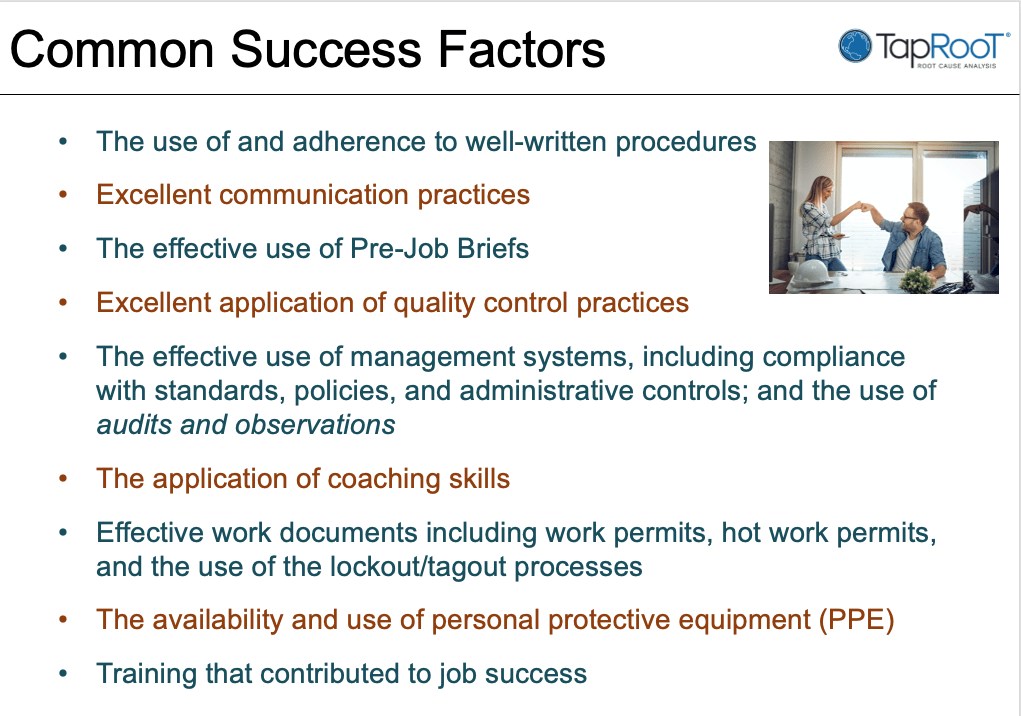
What do you think? Did I miss anything? Do you see any of the items as unnecessary? Leave your comments below.
Opposite of the Root Cause Tree® Root Causes
TapRooT® RCA Users will quickly realize that the items listed are the opposite of the things on the backside of the Root Cause Tree® Diagram. The items on the backside of the Root Cause Tree® Diagram are root causes of failures – things you need to improve. If you improve them, you are most likely going to have success in the job you are performing.
Being Proactive
You don’t have to wait for accidents, project cost overruns, broken equipment, or complaints about quality to improve. You can be proactive and stop human errors before they happen. The slide above is from the Stopping Human Error Course.
You can learn many techniques to achieve excellent human performance and then apply the ones that will help your company the most. (Don’t try to do everything at once – choose the techniques that will deliver the most ROI.)

What are the techniques we teach in the course? Review the following course outline, and you will have an idea…
Course Outline
DAY 1 (8:00 am to 5:00 pm)
- Foundations of Improving Human Performance
- Human Performance – What Should You Expect?
- Three Human Reliability Best Practices
- Mistake Proofing
- Resilience
- Safeguards
- Using TapRooT® Root Cause Analysis for Incidents & Learning Teams
- Human Performance Improvement Technology (Catch Your Own Mistakes)
- STAR
- Questioning Attitude
- Attention to Detail
- Time Out
- Error Traps & Precursors
- Validate Assumptions
- Work Direction/Finding Error Likely Situations
- Pre-Job Hazard Analysis
- Pre-Job Brief
- Personal Safety Assessment
- Post-Job Brief
- Training
- Systematic Approach to Training
- Using Procedures to Improve Human Performance
- Procedures Best Practices
- Procedure Use and Adherence
- Place Keeping
DAY 2 (8:00 am to 5:00 pm)
- Communications
- 3-Way Communication
- Do Not Disturb Sign
- Management System
- Conservative Decision Making
- Stopping Normalization of Deviation
- MOC
- Quality Control
- Independent Verification
- Concurrent Verification
- Human Factors Engineering
- Best Practices (Spot Bad Practices)
- Proactive Use of CHAP
- Hazard/Target Elimination or Substitution
- Improvement Exercise
- What Should You Improve/Which Tools Will Work Best for You?
- Sample Plan
- Present Your Plan (Benchmarking/Feedback)
You will leave this course with a clear understanding of methods to improve human performance and a custom plan to apply these methods at your company to achieve great gains in safety, quality, or operational and maintenance performance (all of which depend on human performance).
Participants receive the book Stopping Human Error, a $99.95 value, as part of the course materials. In addition, participants receive a certificate of completion and a 90-day subscription to TapRooT® VI Software, our dynamic cloud-based root cause analysis software.
When and Where is the Next Course?
The next course is in Knoxville, Tennessee, on September 29-30, 2025, just before the Global TapRooT® Summit (October 1-3). This course will be limited in size, so if you want to make sure you save your seat, register today! CLICK HERE to register.
Consider Attending the SUMMIT
Want to learn even more about SUCCESS? Consider attending the 2025 Global TapRooT® Summit in Knoxville, Tennessee, from October 1st through 3rd.
What can you learn about success at the Summit, and how can you learn about it? First, there are eight Best Practice Tracks where people share lessons learned that can help you achieve success. One of the tracks is focused on improving human performance. Each track has nine sessions to promote best practice sharing, lessons learned, and networking. Seven of the 50 sessions include:



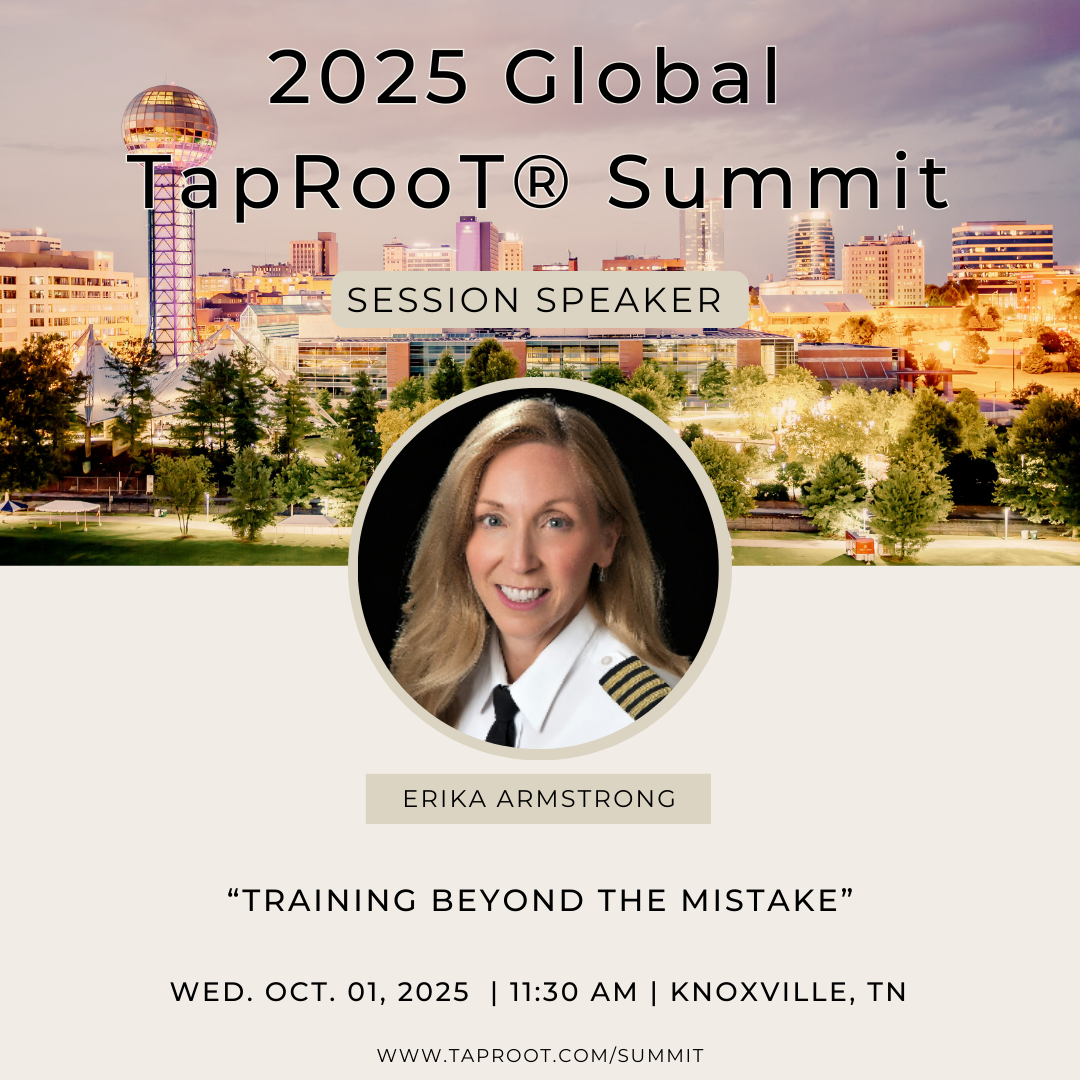



Want to know more about the Summit? CLICK HERE to visit the Summit website.
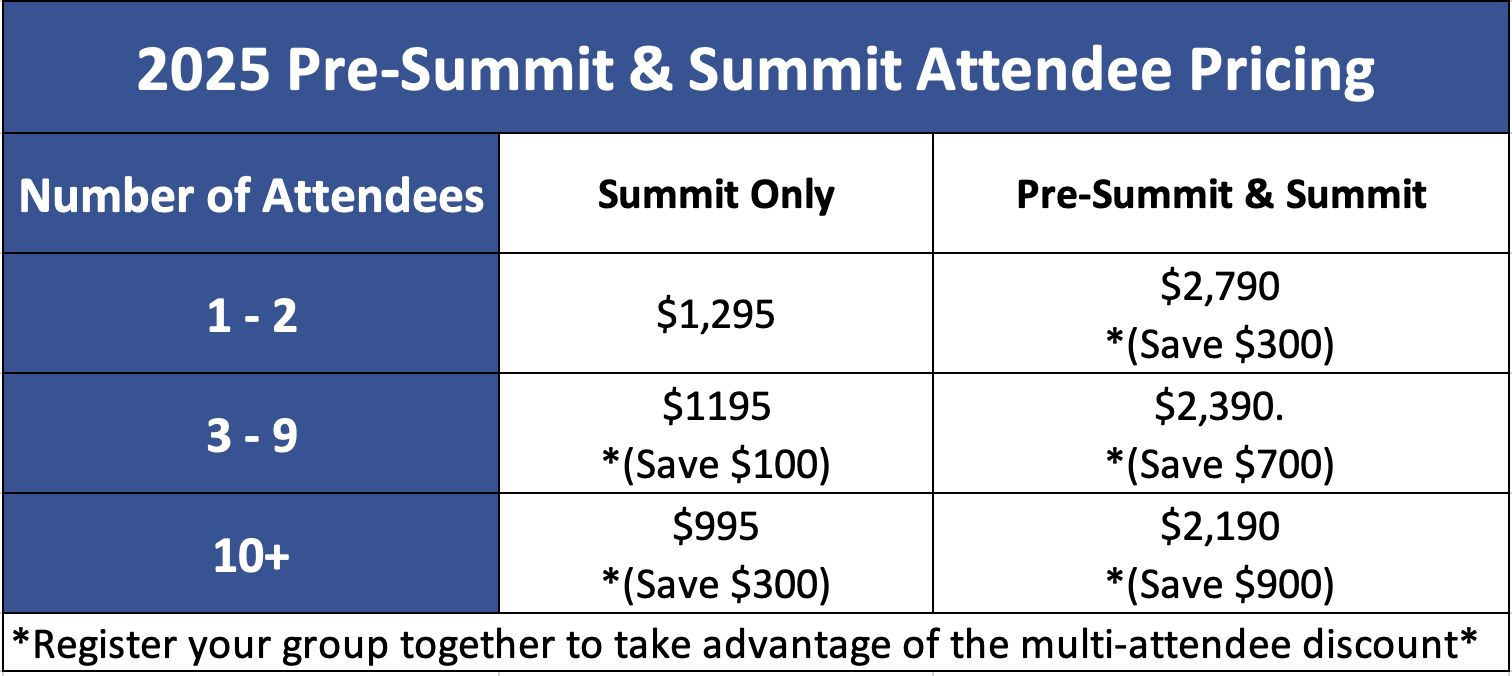
Also, if you attend both the Stopping Human Error Course and the Summit, you will receive a $300 DISCOUNT off the separate course and Summit fees. See the potential discounts below.
CLICK HERE to REGISTER